01 / SPEED
Fast channel
The node architecture is rearranged and the transmission path avoids redundant hops. Opening pages, loading videos, syncing files — waiting time is compressed.
QuickQ VPN puts complex network settings into a single switch. The optimized node architecture shortens the data path, the intuitive interface needs no manual, and multi-layer encryption protects your privacy while sensitive reconnect keeps the connection stable. Whether you're accessing overseas content or collaborating across regions, you get a balanced blend of speed, ease of use, and security.
Available for Windows · macOS · iOS · Android · major Linux distributions

QuickQ re-engineered its node architecture so packets take fewer detours and wait less in queues. Here's how it performs in typical network conditions — fast, but more importantly, stable.
QuickQ doesn't ask you to understand protocols, ports, or routing tables. Install, log in, connect — three things done, and you're online.
Choose the version for your system. The installer is lightweight and ready to use. From clicking download to seeing the main screen usually takes less than two minutes.
One account works across all devices. Subscription status and preferences follow automatically, so you don't need to reconfigure each machine.
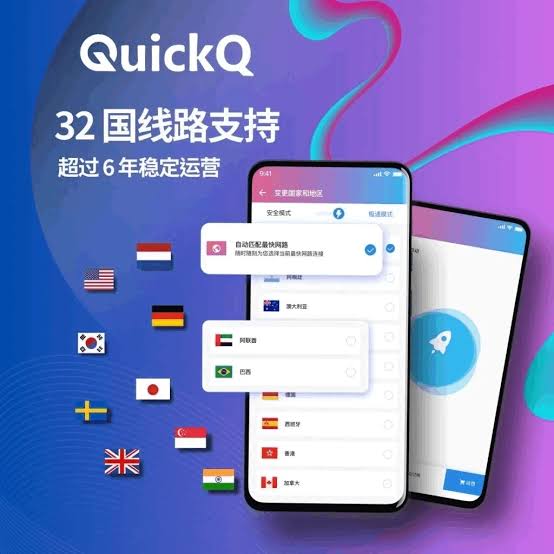
Flip the switch and the client automatically picks the smoother line right now. If you want manual control, the line list is always there to choose and change.
Every simplified interaction, every shortened path, every layer of encryption reinforcement — it all shows up in how the product feels to use.
The node architecture is rearranged and the transmission path avoids redundant hops. Opening pages, loading videos, syncing files — waiting time is compressed.
No need to study protocols or ports. Open the app, tap connect, and let the client decide the line. You just confirm whether it feels smooth.
Multi-layer encryption protects your privacy and data. Login credentials, chat messages, and work files travel through a closed tunnel, safer on public networks.
When the network jitters, Wi-Fi switches, or the device wakes from sleep, it reconnects automatically — no repeated manual taps, the connection stays online.
Windows, macOS, iOS, Android, and major Linux distributions share a similar operating logic. Switching devices doesn't mean learning everything again.
Installation failures, login issues, connected but no internet — tutorials and FAQs are organized by stage, so you can troubleshoot most cases yourself.
Simplicity isn't about cutting features — it's about letting features find you. QuickQ does a lot of judging in the background and keeps only the necessary choices up front.
When you connect, the client evaluates current network quality, latency, and packet loss to recommend a smoother line. You don't need to be a network expert to get a good experience.
The main screen has one core switch. Tap to connect, tap again to disconnect. No pop-up storms, no long wizards — your attention goes back to what you were doing.
Subscription status, frequently used lines, and preferences follow your account. Convenient on your phone, equally convenient on your computer — no need to adapt to a new logic.
Stability never comes from piling up adjectives. It comes from the design of the transmission path, the recovery speed after interruption, and restraint and transparency about privacy boundaries. QuickQ writes these four things into the product itself.
From your device to the exit node, data stays encrypted throughout transmission, so you don't need extra caution on public Wi-Fi.
Only the information necessary to run the service is processed. The privacy policy spells out the scope and purpose of collection — no guessing.
Whether you're connected, which line you're on, and roughly how much latency there is — the client interface shows it directly.
Nodes and clients keep an update rhythm. When you run into issues, tutorials, FAQs, and support channels all give you clear next steps.
The same three words solve different problems depending on where they land in daily use.
Pages open without buffering, video loads more smoothly, and access to cross-border content platforms feels closer to local. Fast transfer noticeably shortens waiting time.
Share documents with overseas colleagues, join video meetings, push to code repositories. Reliable encrypted tunnels protect business data, and sensitive reconnect prevents mid-meeting drops.
Public networks are hard to trust. QuickQ's encrypted tunnel adds a layer of protection to your data. Connect and go — no extra configuration hassle.
One account spans all devices, and line preferences sync automatically. A node you connected to on your phone is still conveniently available when you open your computer.
For more detailed answers, visit the Help Center and browse by category.
First check your account status and subscription, then try switching lines or restarting the client. Most connection issues can be resolved with the troubleshooting steps in the Help Center.
See full troubleshooting →One QuickQ account can manage multiple devices. The exact number of simultaneous connections depends on your current plan. See the subscription page for details.
View plans →It uses multi-layer encryption to transmit data and strictly limits the collection of necessary information. The privacy policy explains the purpose and protection of information in detail.
Read privacy policy →With other tools I used to spend ages picking a line. QuickQ connects right away and it's fast — genuinely simple.
I often work from cafés, and public Wi-Fi always made me uneasy. QuickQ's encrypted tunnel means I don't have to worry while transferring files.
What I like most is the reconnect — I barely notice it. Mid-meeting the network flickered, the video stuttered for half a second and recovered. No drop.
Download the client and follow the three-minute tutorial — you'll find it really doesn't need a manual.